There is no honest single price for "a cold room" — the same 20 m³ room can differ widely in cost depending on how it is configured. This page explains the five things that build the price, shows how common sizes are usually configured, and tells you exactly what to send us to get an accurate quotation within 24 hours — no made-up price lists.
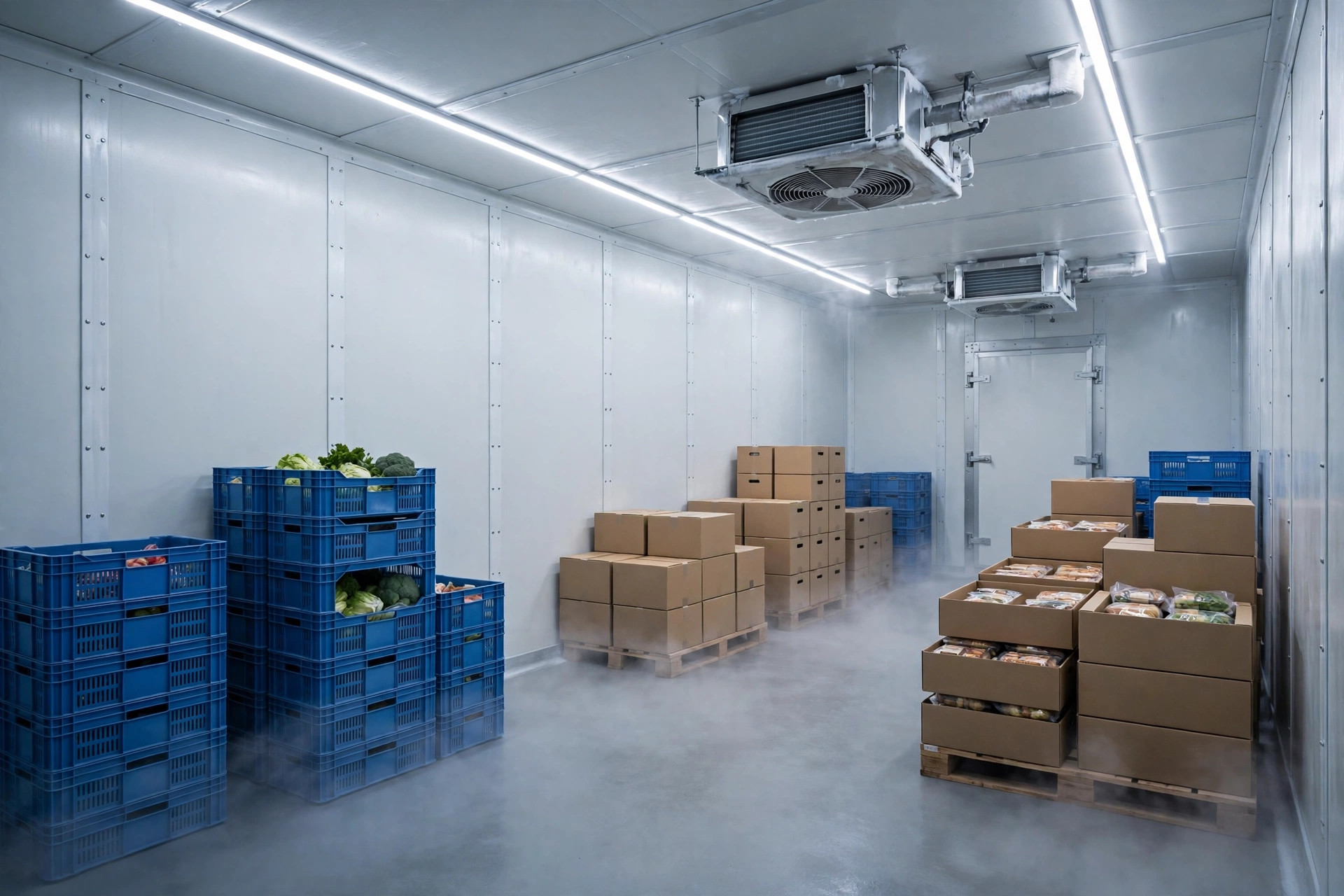
Panels are the body of the room and a major cost block. Freezer rooms need 120 mm PU panels; chiller rooms work with 75–100 mm. Thicker panels cost more per square metre but cut electricity running costs every day of the room's life — in Nigeria, with generator hours in the picture, that trade-off matters.
The condensing unit and compressor are the heart — and the biggest price lever. Buyers typically choose between value-tier Chinese compressors, mid-tier options, and premium European compressor brands. The right choice depends on duty cycle, ambient heat and how critical uptime is for your stock.
A standard hinged door is the economical default. Sliding doors (manual or electric) for trolley and forklift traffic cost more but speed up loading and reduce cold loss on busy sites.
Control box, temperature controller, protection devices and lighting. Nigeria runs 380V/3-phase (or 220V single-phase for small units) at 50Hz — we configure the electrical package to match, and can add phase protection and alarms.
Panels flat-pack densely, so a mid-size cold room kit often fits in a shared or single container to Lagos (Apapa / Tin Can). Freight is quoted per shipment and moves with the market, which is one more reason fixed online price lists mislead. We quote EXW and can quote including freight to Lagos on request — tell us your port preference and whether you have your own clearing agent.
Indicative configurations Nigerian buyers most often choose. Capacity figures are estimates from our calculator logic — run your own size there for a closer estimate.
| Room size (L×W×H) | Volume | Typical use | Temp. band | Panel | Est. capacity | Door |
|---|---|---|---|---|---|---|
| 2.5 × 2 × 2.4 m | 12 m³ | Small shop / pharmacy backup | 0 to +5 °C | 75–100 mm | ~1.4–2.1 kW | Hinged |
| 3 × 3 × 2.6 m | 23 m³ | Frozen food retail / distribution | −18 to −25 °C | 120 mm | ~4–6.5 kW | Hinged |
| 4 × 3 × 3 m | 36 m³ | Fish / meat trading store | −18 to −25 °C | 120 mm | ~6.5–10 kW | Hinged |
| 5 × 4 × 3 m | 60 m³ | Distributor warehouse | −18 to −25 °C | 120 mm | ~10.5–17 kW | Sliding |
| 6 × 5 × 3.5 m | 105 m³ | Cold chain hub / processor | −18 to −25 °C | 120 mm | ~17–27 kW | Sliding |
Chiller versions of the same sizes need noticeably less capacity — use the calculator with the 0 to +5 °C band to compare.
Where grid supply is unstable and diesel is expensive, a hybrid solar configuration — PV array, battery storage, and automatic grid/generator backup — keeps a freezer room safe around the clock. It adds upfront cost but removes a large share of daily fuel spend. See the solar cold room page for how the system is put together.
Because it would mislead you. Panel thickness, compressor tier, door type and freight change the total so much that a single list price either hides a stripped-down specification or pads everything. We would rather give you one exact, itemised quotation: send size, temperature, product and destination, and you get it within 24 hours on working days.
Four things: room size (L×W×H), target temperature, what you will store (plus rough daily intake if product arrives warm), and your city/port in Nigeria. The calculator packages all of this into a WhatsApp message for you automatically.
Yes. Units can be configured for generator supply with proper protection, and hybrid solar versions are available for both chiller and freezer rooms. Tell us your power situation and we size accordingly.
We supply the complete kit with installation drawings and remote guidance; panels are cam-lock modular and designed for local assembly by your technician or installer. Freight can be quoted to Lagos port; inland delivery and clearing are arranged by your agent, or tell us your situation and we will advise.
Nigeria standard: 220V single-phase for small units, 380V three-phase for larger ones, 50Hz. We confirm the electrical configuration on your quotation before production.
Send your size, temperature, product and city — we reply with a complete, itemised quotation, normally within 24 hours on working days.
 ColdRoomKit